


Telescopic loaders, also known as telehandlers, are versatile and powerful machines that have become a staple in various industries, including construction, agriculture, and material handling. As a telescopic loader supplier, I am often asked about the history of these remarkable machines. In this blog post, I will explore the evolution of telescopic loaders, from their humble beginnings to the advanced models we see today.
Early Origins
The concept of a telescopic loader can be traced back to the mid-20th century. In the 1950s, the construction and agricultural industries were in need of a more efficient way to handle materials at different heights and distances. The first attempts at creating a machine with a telescopic boom were made, but these early designs were relatively basic and lacked the sophistication of modern telescopic loaders.
One of the earliest pioneers in the development of telescopic loaders was JCB, a British construction equipment manufacturer. In 1977, JCB introduced the Loadall, which is widely regarded as the world's first production telescopic handler. The Loadall featured a telescopic boom that could extend and retract, allowing it to reach greater heights and distances than traditional front-end loaders. This innovation revolutionized the way materials were handled on construction sites and farms, and it quickly gained popularity around the world.
Technological Advancements
Over the years, telescopic loaders have undergone significant technological advancements. These improvements have made the machines more powerful, efficient, and versatile. Some of the key technological advancements in telescopic loaders include:
- Hydraulic Systems: The development of advanced hydraulic systems has allowed telescopic loaders to lift heavier loads and operate more smoothly. Hydraulic cylinders are used to extend and retract the boom, as well as to control the movement of the bucket or other attachments.
- Load Sensing Technology: Load sensing technology allows the telescopic loader to automatically adjust the hydraulic pressure based on the load being lifted. This helps to improve fuel efficiency and reduce wear and tear on the machine.
- Electronic Controls: Electronic controls have made telescopic loaders easier to operate and more precise. Operators can use a joystick or other control device to manipulate the boom and attachments, and the machine can be programmed to perform specific tasks.
- Attachments: The availability of a wide range of attachments has made telescopic loaders even more versatile. Attachments such as buckets, forks, grapples, and platforms can be easily swapped out, allowing the machine to be used for a variety of applications.
Applications
Telescopic loaders are used in a wide range of industries and applications. Some of the most common applications of telescopic loaders include:
- Construction: Telescopic loaders are commonly used on construction sites to lift and move materials such as bricks, blocks, and lumber. They can also be used to install roofing materials, windows, and other building components.
- Agriculture: In the agricultural industry, telescopic loaders are used for tasks such as loading and unloading hay bales, moving livestock feed, and cleaning out barns. They can also be used to lift and transport heavy equipment and machinery.
- Warehousing and Logistics: Telescopic loaders are used in warehouses and distribution centers to move pallets and other materials. They can be used to load and unload trucks, as well as to stack and store materials in high racks.
- Mining and Quarrying: In the mining and quarrying industry, telescopic loaders are used to load and transport materials such as ore, coal, and gravel. They can also be used to perform maintenance and repair tasks on equipment and machinery.
Our Product Range
As a telescopic loader supplier, we offer a wide range of telescopic loaders to meet the needs of our customers. Our product range includes:

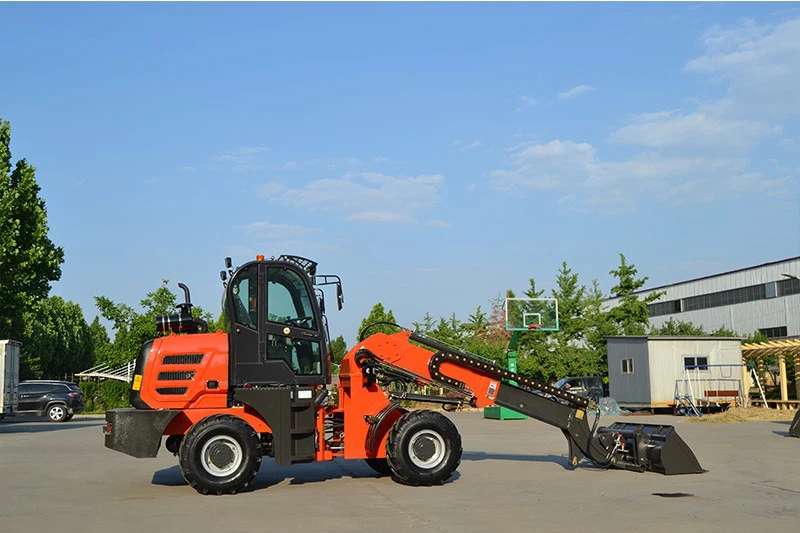
- Telescopic Compact Wheel Loader: This compact and versatile loader is ideal for use in tight spaces and on small construction sites. It features a telescopic boom that can extend up to 6 meters, allowing it to reach high places.
- Telescopic Boom Loader: This powerful loader is designed for heavy-duty applications. It features a telescopic boom that can extend up to 18 meters, allowing it to lift and move large loads at great heights.
- Mini Telescopic Loader: This small and agile loader is perfect for use in confined spaces and on small farms. It features a telescopic boom that can extend up to 4 meters, allowing it to reach high places.
Conclusion
The history of telescopic loaders is a story of innovation and technological advancement. From their humble beginnings in the 1950s to the advanced models we see today, telescopic loaders have become an essential tool in various industries. As a telescopic loader supplier, we are committed to providing our customers with the highest quality products and services. If you are in the market for a telescopic loader, we invite you to contact us to discuss your needs and learn more about our product range. We look forward to working with you to find the perfect telescopic loader for your application.
References
- "Telescopic Handler History." JCB. Accessed September 15, 2023.
- "The Evolution of Telescopic Loaders." Construction Equipment. Accessed September 15, 2023.
- "Telescopic Loaders: A Comprehensive Guide." Equipment World. Accessed September 15, 2023.


