


When it comes to medium tractors, one of the frequently asked questions is about the number of gears they usually have. As a reputable medium tractor supplier, I've encountered this query numerous times from farmers, agricultural enthusiasts, and those involved in various industries that rely on tractors. In this blog, I'll delve into the typical gear configurations of medium tractors, explore the factors influencing the number of gears, and explain why these configurations matter in real - world applications.
Understanding Medium Tractors
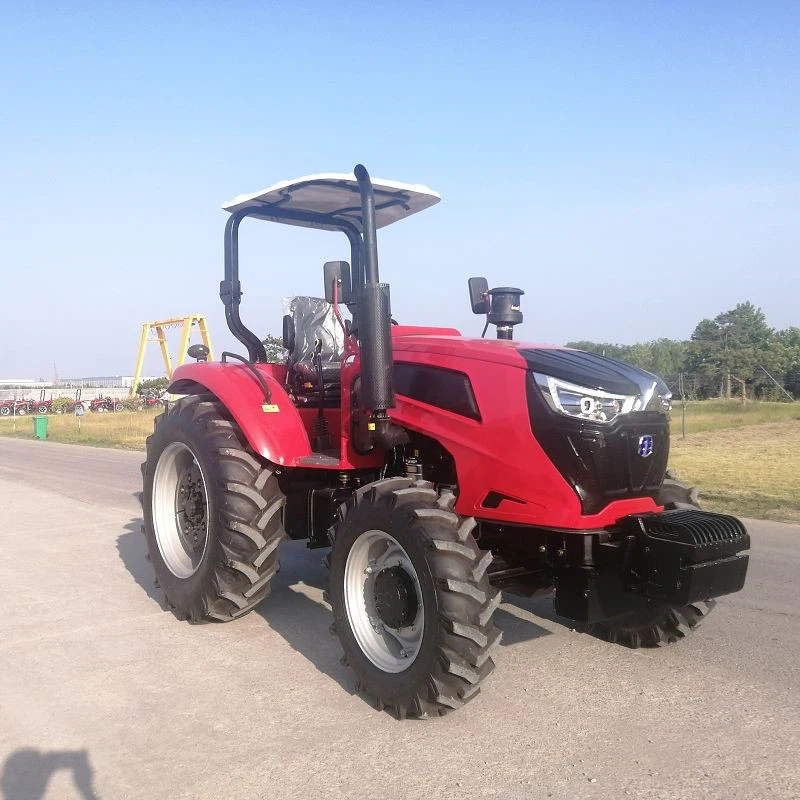
Before we jump into the gear details, let's briefly define what a medium tractor is. A medium tractor is a versatile piece of machinery that strikes a balance between power and maneuverability. It is commonly used in a variety of agricultural tasks, such as plowing, tilling, seeding, and hauling. Medium tractors are also employed in other sectors like landscaping and small - scale construction. There are different types of medium tractors, including Medium Wheeled Tractor and Medium Farm Tractor.
Typical Gear Ranges in Medium Tractors
The number of gears in a medium tractor can vary significantly depending on the model and the intended use. Generally, medium tractors can have anywhere from 8 to 24 gears.
8 - 12 Gears
Some entry - level or more basic medium tractors come with 8 - 12 gears. These tractors are often suitable for small - scale farms or operations with relatively simple tasks. For example, in a small vegetable farm where the tractor is mainly used for light tilling and transporting small loads, an 8 - 12 gear tractor can provide sufficient speed options. The lower number of gears simplifies the operation, making it easier for novice operators to handle.

16 - 24 Gears
On the other hand, more advanced medium tractors may have 16 - 24 gears. These tractors are designed for more complex and demanding tasks. In large - scale agricultural operations, where the tractor needs to perform a wide range of functions, such as deep plowing in different soil types, high - speed transportation of heavy loads, and precise seeding, a greater number of gears offers more flexibility. For instance, when plowing in heavy clay soil, a lower gear can provide the necessary torque, while a higher gear can be used for transporting the harvested crops on the road.
Factors Influencing the Number of Gears
Several factors play a role in determining the number of gears in a medium tractor.
Task Requirements
The type of tasks the tractor will be performing is a major factor. If the tractor is primarily used for slow - speed, high - torque tasks like plowing, a tractor with more lower - range gears is beneficial. Conversely, if the tractor needs to cover long distances on roads or perform tasks that require higher speeds, more high - range gears are necessary.
Terrain
The terrain where the tractor will operate also affects the gear configuration. In hilly or uneven terrain, a tractor with a wider range of gears can better adapt to the changing slopes. Lower gears can be used to climb steep hills, while higher gears can be used on flat or downhill sections.
Operator Skill Level
The skill level of the operator is another consideration. Novice operators may find tractors with fewer gears easier to operate, while experienced operators may prefer tractors with more gears for greater control and efficiency.
Why Gear Configuration Matters
The gear configuration of a medium tractor has a significant impact on its performance and efficiency.
Efficiency
A well - configured gear system allows the tractor to operate at its optimal efficiency. By selecting the appropriate gear, the engine can run at the right speed, reducing fuel consumption and wear and tear on the engine. For example, when a tractor is pulling a heavy load, using a lower gear ensures that the engine doesn't have to work too hard, which can save fuel and extend the engine's lifespan.
Productivity
The right gear configuration can also enhance productivity. With a wider range of gears, the tractor can perform different tasks more quickly and effectively. For instance, a tractor with more gears can switch between different speeds more easily, reducing the time spent on each task.
Versatility
A tractor with a greater number of gears is more versatile. It can be used in a wider variety of applications, from light - duty tasks to heavy - duty operations. This makes it a more valuable asset for farmers and other users who need a single machine to perform multiple functions.
Our Medium Tractors and Gear Options
As a medium tractor supplier, we offer a wide range of tractors with different gear configurations to meet the diverse needs of our customers. Whether you're a small - scale farmer looking for a simple and easy - to - operate tractor or a large - scale agricultural business in need of a high - performance machine, we have the right tractor for you.
Our tractors are designed with the latest technology and engineering to ensure optimal performance, efficiency, and reliability. We understand that every customer has unique requirements, and we work closely with them to recommend the most suitable tractor based on their specific needs.
Contact Us for Purchasing
If you're interested in purchasing a medium tractor and want to learn more about our gear options, we'd love to hear from you. Our team of experts is ready to assist you in finding the perfect tractor for your operations. Whether you have questions about the number of gears, the performance of the tractor, or the price, we're here to provide you with all the information you need.
References
- Agricultural Machinery Handbook, various editions
- Tractor Manufacturer's Specifications and Technical Manuals


