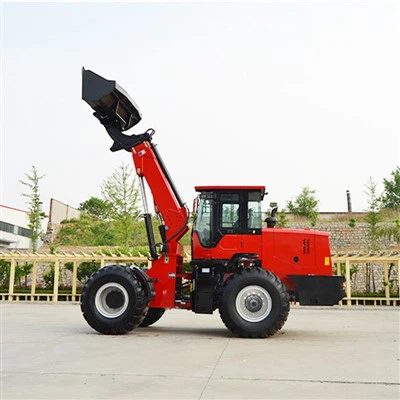
Hey there, folks! As a supplier of wheel loaders, I often get asked about the automatic bucket leveling system on these machines. It's a pretty cool technology that makes a big difference in how efficiently and effectively a wheel loader can do its job. So, let's dive into how this system works and how it benefits operators in the construction and other industries.
First thing's first, what exactly is the automatic bucket leveling system? Well, in simple terms, it's a feature that helps keep the bucket of the wheel loader level during operation. This is super important because when the bucket is level, it can pick up and carry materials more evenly, reducing spillage and improving overall productivity.
Now, let's talk about the nuts and bolts of how it functions. The system primarily relies on a combination of sensors, actuators, and a control unit. The sensors are the eyes of the system. They're usually placed at strategic points on the wheel loader, such as on the boom and bucket. These sensors constantly monitor the position and angle of the bucket in real - time.
There are different types of sensors used. One common type is the tilt sensor. Tilt sensors can detect the angle of the bucket relative to the horizontal plane. They work based on the principle of measuring the acceleration due to gravity. For example, if the bucket starts to tilt forward or backward, the tilt sensor can sense the change in the gravitational force acting on it and send a signal indicating the new angle.
Another type of sensor that might be used is the position sensor. Position sensors are used to track the exact location of the bucket along the boom. They help the system understand how far the bucket is extended or retracted. This information is crucial because it allows the system to accurately calculate the correct leveling position for the bucket at any given time.
Once the sensors have gathered all the necessary data about the bucket's position and angle, they send this information to the control unit. The control unit is like the brain of the automatic bucket leveling system. It's a computerized device that processes the data from the sensors and makes decisions on what actions need to be taken to keep the bucket level.
The control unit uses pre - programmed algorithms to analyze the sensor data. These algorithms take into account factors such as the type of load the bucket is carrying, the speed of the wheel loader, and the position of the boom. Based on this analysis, the control unit calculates the ideal angle for the bucket to be level and then sends signals to the actuators.
Actuators are the muscle of the system. They're the components that actually move the bucket to the correct position. In most wheel loaders, hydraulic actuators are used. Hydraulic cylinders are connected to the bucket and the boom. When the control unit sends a signal, the hydraulic system adjusts the flow of hydraulic fluid to the cylinders. This causes the cylinders to extend or retract, which in turn moves the bucket to the desired level position.
Let's take a look at a real - world scenario to see how this all works in practice. Imagine you're using a 5 Ton Wheel Loader to load gravel into a truck. As you approach the pile of gravel, the sensors start monitoring the position of the bucket. When you lower the bucket to scoop up the gravel, the sensors detect any changes in the bucket's angle.
If the front of the bucket starts to dip down as you're scooping, the tilt sensor sends a signal to the control unit. The control unit quickly analyzes the data and determines that the bucket needs to be raised at the front to level it. It then sends a signal to the hydraulic actuators, which adjust the position of the bucket by extending the appropriate hydraulic cylinder at the front of the bucket. This ensures that the bucket remains level while scooping up the gravel, preventing it from spilling out.
As you lift the loaded bucket and start moving towards the truck, the system continues to work. The position sensors keep track of the bucket's movement along the boom, and the tilt sensors monitor its angle. If there are any changes due to the movement of the wheel loader or the shifting of the load, the control unit and actuators work together to make the necessary adjustments to keep the bucket level.
The benefits of the automatic bucket leveling system are numerous. For operators, it reduces the physical effort required to keep the bucket level manually. This means less fatigue during long working hours, which can lead to increased productivity. It also improves the accuracy of material handling. With a level bucket, the operator can more precisely place the load exactly where it needs to go.
From a safety perspective, the system is a game - changer. It reduces the risk of spillage, which can create hazards on the job site. Spilled materials can cause slips, trips, and falls for workers, and they can also damage equipment. By keeping the bucket level, the automatic bucket leveling system helps maintain a safer working environment.
In addition to individual operator benefits, this technology also has long - term cost savings for companies. With less spillage, there's less waste of materials, which means less money spent on purchasing new materials. Also, because the system reduces wear and tear on the equipment by ensuring more even loading and unloading, there are fewer maintenance requirements and lower repair costs.
Our Construction Wheel Loader models come equipped with state - of - the - art automatic bucket leveling systems. These systems are designed to be reliable and user - friendly, making them a great choice for construction projects of all sizes. Whether you're working on a small building site or a large - scale infrastructure project, the automatic bucket leveling system will help you get the job done more efficiently.
For medium - sized operations, our Medium Wheel Loader is a popular option. It offers a perfect balance of power and maneuverability, and the automatic bucket leveling system further enhances its performance. You can count on it to handle a variety of tasks, from loading and unloading materials to moving earth and debris.
If you're in the market for a wheel loader with an automatic bucket leveling system, I'd highly recommend reaching out. We're here to help you find the right machine that meets your specific needs. We can provide you with detailed information about our products, including specifications, features, and pricing. Whether you have questions about the automatic bucket leveling system or any other aspect of our wheel loaders, our team of experts is ready to assist you. Just drop us a line and let's start the conversation about finding the perfect wheel loader for your business.
In conclusion, the automatic bucket leveling system on a wheel loader is a remarkable piece of technology that offers significant advantages in terms of efficiency, safety, and cost - effectiveness. By using sensors, a control unit, and actuators, it ensures that the bucket remains level at all times, making the job of the operator easier and the operation of the wheel loader more productive.
References


- Industry standards and technical manuals for wheel loaders
- Manufacturer's documentation on automatic bucket leveling systems
Remember, if you're interested in learning more about our wheel loaders or the automatic bucket leveling system, don't hesitate to contact us. We're eager to help you take your construction operations to the next level.