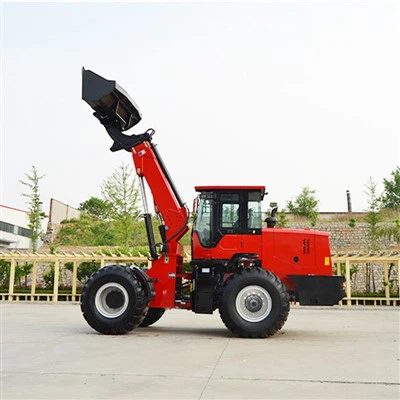
The maximum side - reach capacity of a telescopic loader is a critical factor that many industries, from construction to agriculture, need to understand. As a telescopic loader supplier, I've witnessed firsthand the significance of this metric in determining the efficiency and effectiveness of these machines.
Understanding Telescopic Loaders
Telescopic loaders, also known as telehandlers, are versatile pieces of equipment. They combine the functions of a forklift and a crane, offering the ability to lift and move loads to various heights and distances. There are different types of telescopic loaders, such as the Articulated Telescopic Loader, Telescopic Boom Loader, and Articulating Boom Loader. Each type has its own unique design and capabilities, which in turn affect their side - reach capacities.
Factors Affecting Side - Reach Capacity
Structural Design
The design of the telescopic loader plays a crucial role in determining its side - reach capacity. The length and strength of the boom are primary factors. A longer boom generally allows for a greater side - reach, but it also requires a more robust structure to support the load at extended distances. For example, a telescopic boom loader with a well - engineered boom can reach further horizontally while maintaining stability.
Counterweight
Counterweight is another important aspect. To prevent the loader from tipping over when reaching to the side, an appropriate counterweight is necessary. The amount of counterweight needed depends on the maximum load capacity and the side - reach distance. A larger counterweight can increase the side - reach capacity by providing more stability.


Load Capacity
The load capacity of the telescopic loader is directly related to its side - reach capacity. As the side - reach distance increases, the load - carrying capacity typically decreases. This is because the further the load is from the center of the machine, the greater the leverage force acting on the loader. For instance, a telescopic loader might be able to lift a 5 - ton load at a short side - reach, but only a 2 - ton load at a greater distance.
Measuring Side - Reach Capacity
The side - reach capacity of a telescopic loader is usually measured from the center of the machine to the furthest point the boom can extend horizontally while maintaining a safe and stable operation. Manufacturers conduct rigorous testing to determine the maximum side - reach capacity under different load conditions. These tests take into account factors such as the angle of the boom, the type of load, and the ground conditions.
Real - World Applications
In construction sites, the side - reach capacity of a telescopic loader is essential for tasks such as placing building materials on high - rise structures or loading and unloading materials from trucks. For example, when constructing a multi - story building, a telescopic loader with a large side - reach capacity can reach over scaffolding and other obstacles to place materials precisely where they are needed.
In the agricultural sector, telescopic loaders are used for tasks like loading hay bales onto trailers or moving feed to livestock pens. A loader with a good side - reach capacity can access hard - to - reach areas in large barns or fields, improving efficiency and reducing the need for manual labor.
How Our Telescopic Loaders Excel in Side - Reach Capacity
As a telescopic loader supplier, we understand the importance of side - reach capacity. Our products are designed with advanced engineering techniques to maximize this crucial metric. We use high - strength materials in the construction of our booms, allowing for longer reaches without sacrificing stability.
Our research and development team continuously works on improving the counterweight systems of our telescopic loaders. By optimizing the counterweight distribution, we ensure that our loaders can safely reach further to the side while carrying heavy loads.
We also offer a range of telescopic loaders with different side - reach capacities to meet the diverse needs of our customers. Whether you need a loader for small - scale agricultural work or large - scale construction projects, we have a solution for you.
Importance of Side - Reach Capacity in Choosing a Telescopic Loader
When selecting a telescopic loader, the side - reach capacity should be one of the top considerations. A loader with insufficient side - reach may not be able to perform the required tasks efficiently, leading to increased time and labor costs. On the other hand, choosing a loader with an excessive side - reach capacity when it's not necessary can result in higher equipment costs.
It's important to assess your specific needs, such as the maximum distance you need to reach and the weight of the loads you'll be handling. This will help you choose the right telescopic loader with the appropriate side - reach capacity.
Conclusion
The maximum side - reach capacity of a telescopic loader is a key factor that impacts its performance and suitability for various applications. As a telescopic loader supplier, we are committed to providing high - quality machines with optimal side - reach capabilities. If you are in the market for a telescopic loader and need to understand more about side - reach capacity or other features, we invite you to contact us for a detailed discussion. We can help you select the best telescopic loader that meets your specific requirements.
References
- Manufacturer's manuals for telescopic loaders
- Industry reports on construction and agricultural equipment
- Technical papers on the engineering design of telescopic loaders