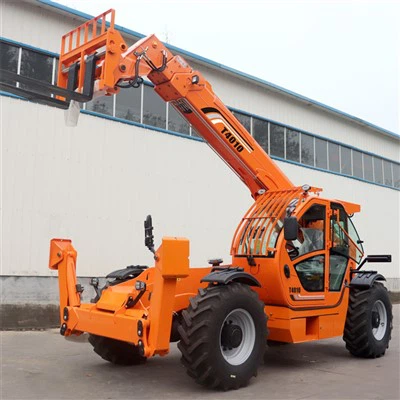
As a telehandler supplier, I've witnessed firsthand the critical role that the electrical system plays in the performance and safety of these versatile machines. Telehandlers, whether Telescoping Boom Forklift, Roto Telescopic Handler, or Agricultural Telehandlers, rely heavily on their electrical components to function properly. In this blog, I'll share some common signs that your telehandler's electrical system may be experiencing problems.
1. Dim or Flickering Lights
One of the most obvious signs of an electrical issue in a telehandler is dim or flickering lights. This can affect both the interior and exterior lights of the machine. Interior dashboard lights that are dim may make it difficult for the operator to read important gauges and indicators, while exterior lights that flicker or are dim can pose a significant safety hazard, especially when operating the telehandler in low - light conditions.
Dim lights can be caused by a variety of factors. A weak or failing battery is a common culprit. Over time, batteries lose their ability to hold a full charge, and if the battery voltage is too low, it can result in reduced power to the lights. Corroded battery terminals can also impede the flow of electricity, causing the lights to dim. Additionally, a faulty alternator may not be charging the battery properly, leading to a continuous drain on the battery and dim lighting.
2. Difficulty Starting the Engine
If you're experiencing difficulty starting your telehandler, it could be a sign of an electrical problem. When you turn the ignition key, a series of electrical components work together to start the engine. The battery provides the initial power, the starter motor engages to turn the engine over, and the ignition system provides the spark to ignite the fuel - air mixture.
A weak battery may not have enough power to turn the starter motor effectively, resulting in slow cranking or no cranking at all. Faulty starter solenoids can also prevent the starter motor from receiving the necessary electrical current to engage. Moreover, issues with the ignition switch or wiring can disrupt the flow of electricity to the starter and ignition system, causing starting problems.
3. Malfunctioning Gauges and Sensors
Telehandlers are equipped with a variety of gauges and sensors that provide important information to the operator, such as fuel level, engine temperature, and hydraulic pressure. If these gauges and sensors start to malfunction, it's likely an indication of an electrical problem.
For example, a fuel gauge that reads incorrectly may be due to a faulty sending unit, which is an electrical component located inside the fuel tank. A temperature gauge that shows erratic readings could be caused by a malfunctioning temperature sensor or a problem with the wiring connecting the sensor to the gauge. Malfunctioning sensors not only provide inaccurate information but can also lead to serious engine damage if not addressed promptly.
4. Electrical Shorts and Frequent Blown Fuses
Electrical shorts occur when a live wire comes into contact with a ground or another wire, creating an unintended path for electricity. This can cause a surge of current, which often results in blown fuses. If you find yourself replacing fuses frequently in your telehandler, it's a clear sign that there's an electrical short somewhere in the system.
Electrical shorts can be caused by damaged wiring, which may occur due to wear and tear, abrasion from moving parts, or rodent damage. Moisture can also cause electrical shorts, especially in areas where the wiring is exposed or not properly sealed. Identifying and fixing the source of an electrical short is crucial to prevent further damage to the electrical system and potential fire hazards.
5. Unusual Electrical Noises
Strange electrical noises coming from the telehandler can be a warning sign of an electrical problem. Buzzing, clicking, or humming sounds may indicate issues with electrical components such as relays, solenoids, or the alternator.
A buzzing sound could be a sign of a loose connection or a relay that is not functioning properly. Clicking noises may suggest that a solenoid is engaging and disengaging repeatedly or that there is a problem with the electrical contacts. A humming sound from the alternator may indicate a worn - out bearing or a problem with the internal components.
6. Malfunctioning Accessories
Telehandlers often come equipped with a range of accessories, such as radios, heaters, and hydraulic controls that rely on the electrical system. If these accessories stop working or malfunction, it could be due to an electrical issue.
For instance, a non - functioning radio may be caused by a blown fuse, a loose connection, or a problem with the antenna. A heater that doesn't produce heat may have a faulty heating element or an issue with the electrical circuit that powers it. Hydraulic controls that are unresponsive or operate erratically may be due to electrical problems with the solenoid valves that control the hydraulic flow.
7. Erratic Operation of the Hydraulic System
The hydraulic system in a telehandler is controlled by electrical components, including solenoid valves and sensors. If the hydraulic system is operating erratically, such as the boom not extending or retracting smoothly, or the forks not lifting or lowering properly, it could be an electrical problem.


Solenoid valves are responsible for controlling the flow of hydraulic fluid, and if they are not working correctly due to electrical issues, it can lead to inconsistent hydraulic performance. Faulty sensors that monitor the position and pressure of the hydraulic components can also cause the system to operate incorrectly.
Importance of Addressing Electrical Problems Promptly
Ignoring electrical problems in a telehandler can have serious consequences. Electrical issues can lead to reduced performance, increased downtime, and even safety hazards. A malfunctioning electrical system can cause the telehandler to break down unexpectedly, resulting in lost productivity and costly repairs.
Moreover, electrical problems can pose a fire risk, especially if there are electrical shorts or overheating components. Ensuring the proper functioning of the electrical system is essential for the safe and efficient operation of the telehandler.
Conclusion
As a telehandler supplier, I understand the importance of a reliable electrical system in these machines. Being aware of the signs of electrical system problems, such as dim or flickering lights, difficulty starting the engine, malfunctioning gauges and sensors, electrical shorts, unusual noises, malfunctioning accessories, and erratic hydraulic operation, can help you identify and address issues before they escalate.
If you notice any of these signs in your telehandler, it's crucial to have the electrical system inspected and repaired by a qualified technician. Our team of experts is here to assist you with all your telehandler maintenance and repair needs. Whether you own a Telescoping Boom Forklift, Roto Telescopic Handler, or Agricultural Telehandlers, we can provide you with high - quality service and genuine parts.
If you're in the market for a new telehandler or looking to upgrade your existing equipment, we invite you to contact us for more information. Our sales team is ready to discuss your specific requirements and help you find the perfect telehandler for your needs. Don't hesitate to reach out and start the conversation about your telehandler procurement.
References
- "Telehandler Maintenance Manuals" - Various manufacturers' official manuals
- "Electrical Systems in Heavy Equipment" - Industry - specific technical publications
- "Common Electrical Problems in Construction Machinery" - Research papers from engineering institutions