


Hey there! As a supplier of medium tractors, I often get asked about the PTO horsepower of these machines. So, I thought I'd take a few minutes to break it down for you and explain why it's such an important factor when it comes to choosing the right tractor for your needs.
First things first, let's talk about what PTO horsepower actually means. PTO stands for Power Take-Off, and it's a mechanism that allows the tractor to transfer power from its engine to an attached implement. This could be anything from a mower or a baler to a tiller or a generator. The PTO horsepower is the amount of power that the tractor can deliver to the implement through the PTO shaft.
Now, you might be wondering why PTO horsepower is so important. Well, it all comes down to the type of work you'll be doing with your tractor. Different implements require different amounts of power to operate effectively. For example, a large hay baler might need a lot of power to compress the hay into tight bales, while a small lawn mower might only need a fraction of that power.
If you choose a tractor with too little PTO horsepower for the implement you're using, you'll likely run into problems. The implement might not work properly, or it might even damage the tractor's engine. On the other hand, if you choose a tractor with too much PTO horsepower, you'll be paying for more power than you actually need, which can be a waste of money.
So, how do you know what PTO horsepower you need for your medium tractor? The answer depends on a few factors, including the size and type of the implement you'll be using, the terrain you'll be working on, and the frequency of use.
Let's start by looking at the size and type of the implement. Generally speaking, larger and more complex implements require more PTO horsepower. For example, a large square baler might need anywhere from 50 to 100 PTO horsepower, while a small rotary tiller might only need 10 to 20 PTO horsepower.
It's also important to consider the type of work the implement will be doing. Some implements, like mowers and tillers, require continuous power to operate, while others, like balers and harvesters, require intermittent power. If you're using an implement that requires continuous power, you'll need a tractor with a higher PTO horsepower rating to ensure that it can keep up with the demand.
The terrain you'll be working on is another important factor to consider. If you'll be working on flat, even ground, you'll generally need less PTO horsepower than if you'll be working on hilly or uneven terrain. This is because the tractor will have to work harder to move the implement up and down the hills, which requires more power.
Finally, the frequency of use is also a factor. If you'll be using your tractor and implement on a regular basis, you'll want to choose a tractor with a higher PTO horsepower rating to ensure that it can handle the workload. On the other hand, if you'll only be using your tractor occasionally, you might be able to get away with a lower PTO horsepower rating.
Now that you know what factors to consider when choosing the right PTO horsepower for your medium tractor, let's take a look at some of the PTO horsepower ratings you can expect to find on different types of medium tractors.
Most medium tractors have PTO horsepower ratings ranging from 20 to 100 horsepower. The exact rating will depend on the make and model of the tractor, as well as the engine size and other factors.
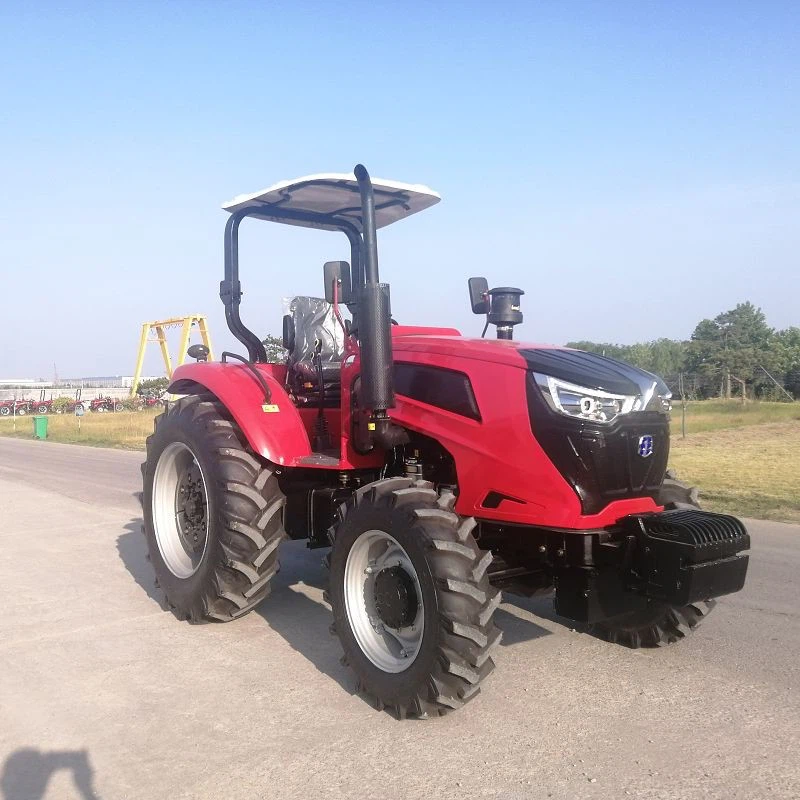
For example, a small to medium-sized Medium Wheeled Tractor might have a PTO horsepower rating of around 20 to 40 horsepower. This type of tractor is ideal for light-duty tasks like mowing, tilling, and hauling small loads.
A medium-sized Medium Farm Tractor might have a PTO horsepower rating of around 40 to 70 horsepower. This type of tractor is suitable for a wider range of tasks, including medium-duty mowing, tilling, and baling.
A larger medium tractor might have a PTO horsepower rating of 70 to 100 horsepower or more. This type of tractor is designed for heavy-duty tasks like large-scale farming, forestry, and construction.
So, there you have it! That's a basic overview of what PTO horsepower is and why it's so important when choosing a medium tractor. Remember, the right PTO horsepower for your tractor will depend on the type of work you'll be doing, the terrain you'll be working on, and the frequency of use.
If you're still not sure what PTO horsepower you need for your medium tractor, don't worry! Our team of experts is here to help. We can answer any questions you might have and help you choose the right tractor for your needs. Just reach out to us, and we'll be happy to assist you in your purchasing decision and have a detailed discussion about your requirements.
References

- Agricultural Machinery Handbook
- Tractor Manufacturer's Specifications Guides


