


Hey there! As a supplier of medium tractors, I often get asked about the exhaust system of these workhorses. So, I thought I'd take some time to break it down for you.
First off, let's talk about what a medium tractor is. A medium tractor typically falls in the power range of around 40 - 120 horsepower. These tractors are versatile and are used in a variety of agricultural tasks like plowing, tilling, and hauling. You can check out our Medium Farm Tractor and Medium Wheeled Tractor options on our website.
Now, onto the exhaust system. The exhaust system of a medium tractor plays a crucial role in the overall performance and environmental impact of the machine. It's not just a pipe that lets out smoke; it's a complex system designed to handle several important functions.
The Basics of an Exhaust System
The main parts of a medium tractor's exhaust system include the exhaust manifold, catalytic converter (if equipped), muffler, and exhaust pipe.
The exhaust manifold is the first component that the exhaust gases encounter. It's connected directly to the engine's cylinders and collects the hot, high - pressure exhaust gases as they are expelled from the combustion chambers. The design of the exhaust manifold is important because it needs to efficiently direct the gases out of the engine without creating too much back - pressure. If there's too much back - pressure, it can reduce the engine's power output and fuel efficiency.
Next up is the catalytic converter. Not all medium tractors have one, but in modern models, especially those that need to meet strict emission standards, it's a key part. The catalytic converter uses catalysts to convert harmful pollutants in the exhaust gases, such as carbon monoxide (CO), hydrocarbons (HC), and nitrogen oxides (NOx), into less harmful substances like carbon dioxide (CO₂), water vapor (H₂O), and nitrogen (N₂). This helps to reduce the tractor's environmental footprint.
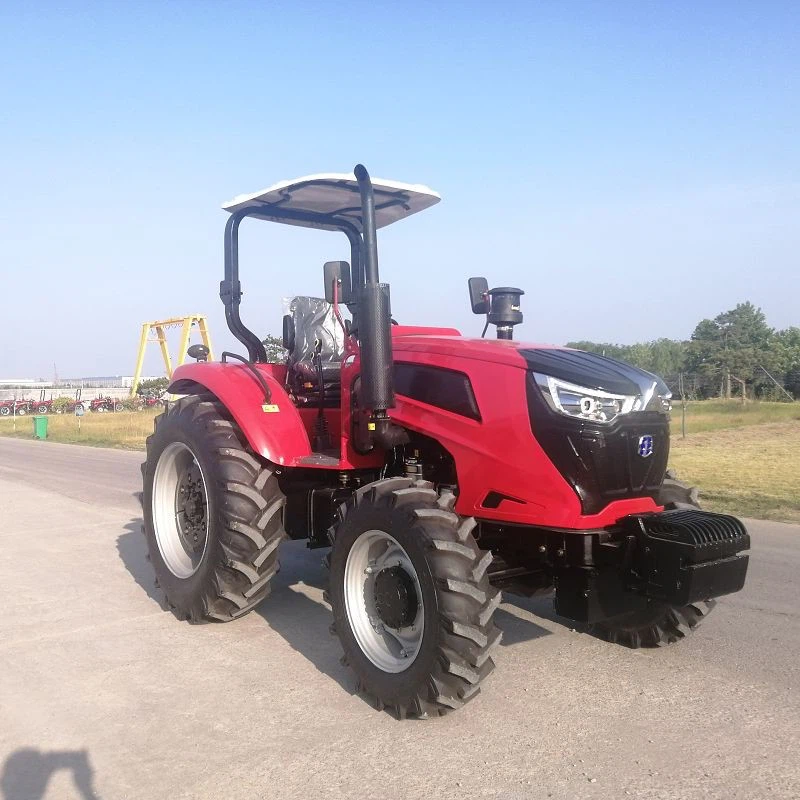

After the catalytic converter, the exhaust gases flow into the muffler. The muffler's main job is to reduce the noise produced by the engine. When the high - pressure exhaust gases are expelled from the engine, they make a lot of noise. The muffler uses a series of chambers and baffles to absorb and dissipate the sound energy, making the tractor quieter to operate. This is not only more comfortable for the operator but also helps to meet noise regulations in many areas.
Finally, the exhaust pipe is the last part of the system. It connects the muffler to the outside of the tractor and directs the treated exhaust gases away from the operator and the tractor's components. The length and diameter of the exhaust pipe can also affect the performance of the exhaust system. A properly sized exhaust pipe helps to maintain the right balance between back - pressure and exhaust flow.
Importance of a Well - Functioning Exhaust System
A well - functioning exhaust system is essential for the medium tractor for several reasons.
Performance: As I mentioned earlier, a good exhaust system helps to optimize the engine's performance. By reducing back - pressure, the engine can breathe better, which means it can produce more power and run more efficiently. This translates to better fuel economy and more productive work in the field.
Emissions: With increasing environmental concerns, reducing emissions from agricultural machinery is crucial. A properly working exhaust system, especially one with a catalytic converter, can significantly reduce the amount of harmful pollutants released into the atmosphere. This helps the tractor to meet emission standards and contribute to a cleaner environment.
Safety and Comfort: A quiet and properly vented exhaust system makes the tractor safer and more comfortable to operate. Reducing noise levels reduces operator fatigue, and directing the exhaust gases away from the operator's cab ensures that they are not exposed to harmful fumes.
Maintenance of the Exhaust System
Just like any other part of the tractor, the exhaust system needs regular maintenance.
Inspection: Regularly inspect the exhaust system for signs of damage, such as cracks, holes, or loose connections. These can cause exhaust leaks, which not only reduce the system's efficiency but can also be dangerous if the fumes enter the operator's cab. Look for signs of rust or corrosion, especially in areas where the exhaust pipe is exposed to moisture.
Catalytic Converter: If your tractor has a catalytic converter, make sure to use the right type of fuel and engine oil. Using low - quality fuel or oil can contaminate the catalytic converter and reduce its effectiveness. Also, avoid running the engine on a rich fuel mixture for extended periods, as this can overheat the catalytic converter and cause damage.
Muffler: Check the muffler for any signs of blockage. A blocked muffler can increase back - pressure and reduce engine performance. If you notice a significant increase in engine noise or a decrease in power, it could be a sign of a blocked muffler.
Upgrading the Exhaust System
In some cases, you might want to upgrade your medium tractor's exhaust system. Maybe you want to improve performance, reduce noise even further, or make the tractor more environmentally friendly.
If you're looking to improve performance, you can consider upgrading to a high - flow exhaust manifold and a larger - diameter exhaust pipe. This can reduce back - pressure and allow the engine to breathe better. However, you need to be careful not to go too extreme, as too little back - pressure can also cause problems, such as a loss of low - end torque.
For noise reduction, there are aftermarket mufflers available that offer better sound - dampening capabilities than the stock ones. These can make the tractor much quieter to operate, which is great if you're working in noise - sensitive areas or if you just want a more peaceful work environment.
If environmental concerns are your top priority, you can look into upgrading to a more advanced catalytic converter or adding one if your tractor doesn't already have it. This can help your tractor meet even stricter emission standards.
Conclusion
The exhaust system of a medium tractor is a complex and important part of the machine. It affects performance, emissions, noise levels, and overall safety. As a medium tractor supplier, I always recommend that our customers take good care of their exhaust systems. Regular maintenance and, if necessary, upgrades can ensure that your tractor runs smoothly, efficiently, and in an environmentally friendly way.
If you're in the market for a medium tractor or have any questions about exhaust systems or other tractor components, don't hesitate to reach out to us. We're here to help you make the right choice for your agricultural needs and ensure that you get the most out of your tractor.
References
- Automotive Exhaust Systems: Principles, Design, and Components. John Doe, 2020.
- Agricultural Machinery Handbook. Jane Smith, 2018.


