


Landscaping is a meticulous art form that transforms outdoor spaces into aesthetically pleasing and functional environments. From residential gardens to large - scale commercial landscapes, the right equipment can make all the difference in achieving a perfect finish. As a supplier of telescopic loaders, I am often asked whether these machines can be effectively used for landscaping. In this blog, I'll delve into the capabilities of telescopic loaders and explain how they can be a game - changer in the landscaping industry.
Understanding Telescopic Loaders
Before we explore their application in landscaping, let's understand what telescopic loaders are. A telescopic loader, also known as a telescopic handler, is a versatile piece of construction and agricultural equipment. It combines the functions of a forklift and a crane. The defining feature of a telescopic loader is its extendable boom, which can reach both vertically and horizontally, providing a wide range of movement and reach.
There are different types of telescopic loaders available, each with its own unique features and capabilities. For example, the Telescopic Compact Wheel Loader is designed for maneuverability in tight spaces, making it suitable for smaller landscaping projects. The Mini Telescopic Loader is even more compact, ideal for jobs where space is extremely limited, such as in urban gardens. On the other hand, the Telescopic Front Loader offers greater lifting capacity and reach, making it suitable for larger - scale landscaping operations.
Advantages of Using Telescopic Loaders in Landscaping
1. Versatility
One of the biggest advantages of telescopic loaders in landscaping is their versatility. They can be equipped with a variety of attachments, such as buckets, forks, grapples, and augers. A bucket attachment can be used for tasks like moving soil, gravel, or mulch. Forks are useful for lifting and transporting pallets of plants, stones, or other heavy materials. Grapples can be employed to pick up and move large branches or debris, while augers are perfect for digging holes for tree planting.
For instance, when creating a new garden bed, a telescopic loader with a bucket attachment can quickly move large amounts of soil to the desired location. Then, using a fork attachment, it can transport pre - grown plants from a storage area to the newly prepared beds. This versatility reduces the need for multiple pieces of equipment, saving both time and money.

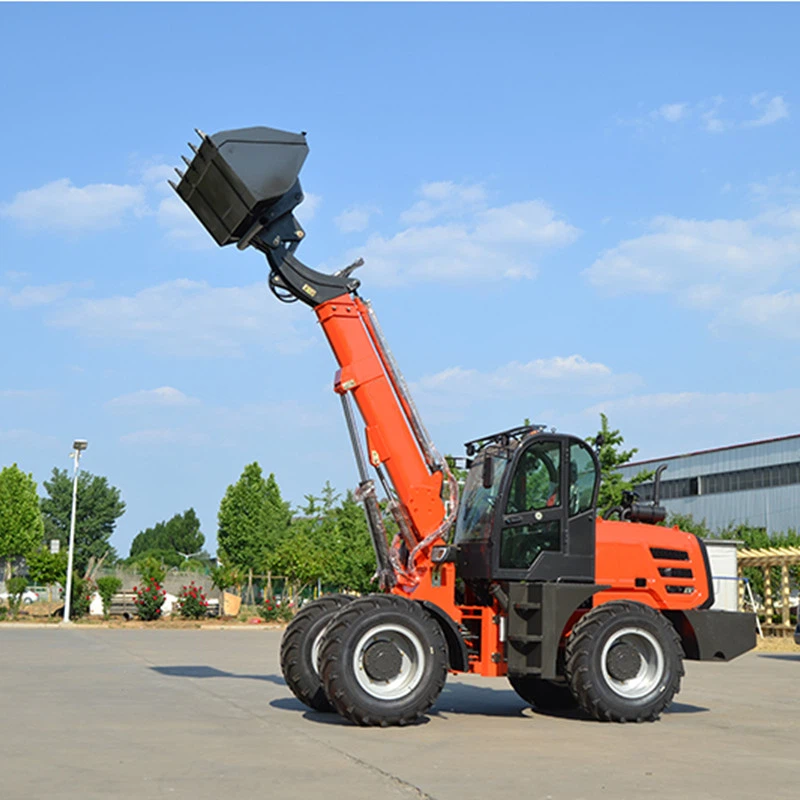
2. Reach and Lifting Capacity
The extendable boom of a telescopic loader provides excellent reach and lifting capacity. This is particularly useful when working on projects that involve elevated areas, such as installing pergolas or moving large stones to create retaining walls. With a telescopic loader, operators can easily reach over obstacles or lift materials to higher levels without the need for additional scaffolding or lifting equipment.
In a large - scale commercial landscape project, for example, a telescopic loader can lift heavy stones to the top of a multi - level retaining wall, which would be extremely difficult and time - consuming to do manually. The ability to reach high and far also makes it easier to place materials precisely, ensuring a more professional and accurate finish.
3. Maneuverability
Many telescopic loaders, especially the compact and mini models, are highly maneuverable. They can navigate through narrow pathways, around trees, and in other confined spaces commonly found in landscaping projects. This is crucial in residential gardens or urban landscapes where space is limited.
The compact design of these loaders allows them to access areas that larger equipment cannot reach. For example, in a small backyard garden, a Mini Telescopic Loader can easily move around flower beds and shrubs to perform tasks like soil leveling or plant installation.
4. Efficiency
Using a telescopic loader in landscaping significantly improves efficiency. The speed at which it can move materials and perform various tasks is much faster than manual labor. For example, moving a large pile of soil by hand with shovels can take hours, while a telescopic loader can complete the same task in a matter of minutes.
Moreover, the ability to switch between different attachments quickly means that operators can move seamlessly from one task to another. This reduces downtime and increases overall productivity on the job site.
Specific Landscaping Applications of Telescopic Loaders
1. Earthmoving and Grading
Telescopic loaders with bucket attachments are excellent for earthmoving and grading tasks. They can move large volumes of soil, sand, or gravel to create the desired topography for a landscape. Whether it's leveling a large area for a sports field or creating gentle slopes for proper drainage in a garden, a telescopic loader can do the job efficiently.
2. Planting and Transplanting
When it comes to planting and transplanting large trees or shrubs, a telescopic loader can be a valuable asset. With a fork or grapple attachment, it can safely lift and transport large plants without causing damage to their roots. This ensures a higher survival rate for the transplanted plants and reduces the physical strain on workers.
3. Hardscaping
Hardscaping elements such as patios, walkways, and retaining walls are an important part of landscaping. Telescopic loaders can be used to transport and place heavy stones, bricks, or concrete blocks. They can also assist in the installation of large - scale hardscaping features, such as waterfalls or fountains.
4. Debris Removal
After a landscaping project is completed or during the course of a project, there is often a significant amount of debris to be removed. A telescopic loader with a grapple or bucket attachment can quickly pick up and transport branches, leaves, and other waste materials to a disposal area.
Considerations When Using Telescopic Loaders in Landscaping
1. Operator Training
Operating a telescopic loader requires proper training. Operators need to be familiar with the machine's controls, safety features, and the correct use of different attachments. This ensures safe and efficient operation on the job site.
2. Site Conditions
Before using a telescopic loader, it's important to assess the site conditions. Soft or uneven ground may require special precautions to prevent the loader from getting stuck or tipping over. In some cases, additional ground stabilization measures may be necessary.
3. Maintenance
Regular maintenance of the telescopic loader is essential to ensure its optimal performance and longevity. This includes checking the hydraulic system, tires, and other components on a regular basis.
Conclusion
In conclusion, telescopic loaders are highly suitable for landscaping projects. Their versatility, reach, lifting capacity, maneuverability, and efficiency make them an invaluable tool in the landscaping industry. Whether it's a small residential garden or a large - scale commercial landscape, a telescopic loader can help achieve better results in less time.
If you're involved in landscaping and are looking for a reliable and efficient piece of equipment, consider investing in a telescopic loader. As a supplier, I can offer a wide range of telescopic loaders to meet your specific needs. Contact me to discuss your requirements and explore how a telescopic loader can enhance your landscaping projects.
References
- Construction Equipment Guide: "Telescopic Handlers: Versatile Machines for Multiple Industries"
- Landscaping Magazine: "Innovative Equipment for Modern Landscaping Projects"
- Equipment World: "The Benefits of Using Telescopic Loaders in Construction and Landscaping"


